


If only Golden Age Radio and Edgar Rice Burroughs Had Connected
- carolinacalots
- Jan 6, 2024
- 5 min read

Like many others, I was first introduced to Tarzan through the movies. Johnny Weissmuller films and others would run regularly on Saturday morning television when I was a kid. I loved the thrill of watching Tarzan swing through the jungle and fight off wild animals. But one Christmas, my father surprised me with a multi-band radio. Once we had strung a large X-shaped aerial between the largest trees in the yard (which required climbing on my part), the audio world was my oyster. I spent hours every day tinkering with the radio, trying to find the perfect frequencies. I discovered new stations and genres of music, but the greatest discovery was radio dramas, mysteries, comedies, and adventures.
For years, I had heard about the shows on radio that my parents and grandparents had enjoyed (The Shadow, Suspense, The Green Hornet), but experiencing Old Time Radio (OTR) had remained elusive. However, with my new radio, I could tune in to stations from all over the USA and listen to shows like Lum & Abner, Mr. & Mrs. North, and Tarzan, Lord of the Jungle.

"From the heart of the jungle comes a savage cry of victory. This is Tarzan, Lord of the Jungle! From the black core of dark Africa... land of enchantment, mystery and violence comes one of the most colorful figures of all time. Transcribed from the immortal pen of Edgar Rice Burroughs—Tarzan, the bronzed, white son of the jungle!”
Listening to Tarzan on the radio was an unbelievable thrill. The sound effects and music brought the jungle to life, and the voice actors made the characters seem real.
Burroughs saw the potential of radio and said – “with two programs, we are netting more than we do from the sale of all our books” - but at some point, he dropped the ball. Some speculate it was the program’s distribution method that killed the Burroughs radio

venture. Tarzan was a syndicated program. This method became popular in the early 1930s thanks to the RCA Victor’s Home Recording system. With the system, companies produced programs and circulated them using names designed to simulate those of a real network. They include Continental Broadcasting, World Broadcasting, Radio Digest Bureau Of Broadcasting, and others, all producing programs and syndicating them via discs. (1)
According to Robert Barrett in Tarzan on the Radio: An Anecdotal Guide to Edgar Rice Burroughs, after the success of the Tarzan of the Apes radio adventure, Burroughs hired a scriptwriter for Tarzan and the Diamonds of Asher, a thirty-nine-chapter serial which was released in 1934. Barrett suggests Burroughs had some concern about the success of Asher, and this resulted in the late start of the next chapter play’s production schedule, Tarzan and the Fires of Tohr, which was not completed until late 1935.
Tarzan and the Fires of Tohr would have to be construed a failure. It didn't play on enough radio stations to make its production worthwhile. One of the reasons was that there was just too much time wasted between the completion of Tarzan and the Diamond of Asher and the completed recording of Tarzan and Fires of Tohr. By the time it was ready, most of the radio stations (after begging for another Tarzan serial) had filled their airtime with other shows. (2)
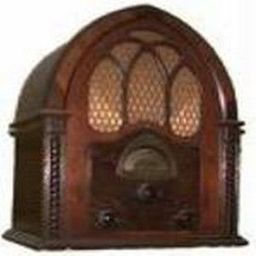
Another factor might have been the growth of Network Radio. By 1934, four radio networks, NBC Red, New Blue, CBS, and Mutual Broadcasting System had formed and quickly taken over the industry. They initiated a series of standards and formats that would shape the medium, and later, early television would adopt some of them. One of those standards was that they only broadcast network programs live, as they felt the sound quality of phonograph records was too bad to broadcast. That policy would not change until the late 1940s.
Even with this bump in the road, Burroughs would make two additional attempts at getting Tarzan swinging through the airwaves. In 1938, a mysterious sponsor expressed an interest in supporting a new program. Although they hired a writer and prepared scripts, nothing materialized. Of the second effort, only a scribbled note at the bottom of a letter concerning a possible show title, Tarzan, Lord of the Jungle, exists. Burroughs liked the suggestion but said, “it will be confusing because of the same book title.” (2)
As a fan of both Burroughs and Golden Age Radio, I find it most disturbing that no radio executives, writers, or producers ever considered any of the authors' other properties. There are many blurbs written about the unrealized animated John Carter, but why didn’t we ever go to Barsoom on the radio?

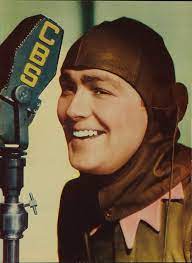



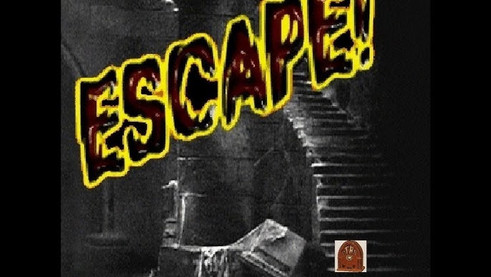
Both Flash Gordon and Buck Rogers enjoyed tremendous success, while the anthology show Escape would have provided an excellent platform for The Land That Time Forgot or The Monster Men. The program had already featured the works of Joseph Conrad, H. Ryder Haggard, Edgar Allan Poe, and Jack London's "The Scarlet's Plague" in its last year. (3) Even as late as 1950, Dimension X, would have proven an excellent place for a Burroughs property like The Moon Men. Then, of course, there were westerns, a staple on radio and early television. Nuff’ said.
The most frustrating is that whether the story was told in first person, as in a number of Barsoomian books, or third person as with Tarzan and others, Burroughs was a master at pacing the action. His narrative style was perfect for the theater of the mind, a place where anything was possible, and the only limit was one's own imagination. Let your mind drift now if you will, as you turn on your radio, it glows to life, and as the hum settles down the announcer says:

Tonight the Columbia Broadcasting System and its affiliated stations coast-to-coast present Orson Welles and The Mercury Theatre on the Air
in Edgar Rice Burroughs' "A Princess of Mars."
Music: Theme Up and fade...
Ladies and gentlemen, the director of The Mercury Theatre and playing John Carter in tonight's broadcast- Orson Welles.
Wow, an experience we will never have, but can forever live in our dreams. Thankfully, the Tarzan radio series, particularly the 1951 edition, proved the medium's well-developed ability to bring all the Master of Adventure's creations to life. Listening to Tarzan on the radio was, and is a magical experience. Like the author’s words, it sparks the imagination, transporting you to a new place. One of adventure, action, excitement, and edge-of-the-seat thrills.

We've recently added Tarzan Radio to our website, so you can now tune in to the classic Tarzan of the Apes episodes and the 1951 Lord of the Jungle shows right from our site. Although these productions are available elsewhere, we hope you'll find our site to be a convenient and enjoyable listening post from time to time.
1 – Documenting Early Radio by Elizabeth McLeod, Know Radio Recordings 1928-1930
2 - Edgar Rice Burroughs' TARZAN ON RADIO: An Anecdotal Guide to Edgar Rice Burroughs by Robert Barrett, Published by Radio Spirits, Inc., Pages 29 & 30
3- Tune In Yesterday, The Ultimate Encyclopedia of Old-Time Radion 192-1976 by John Dunning, Prentice-Hall, Inc., Englewood Cliffs, N.J., Page 184


Comments